
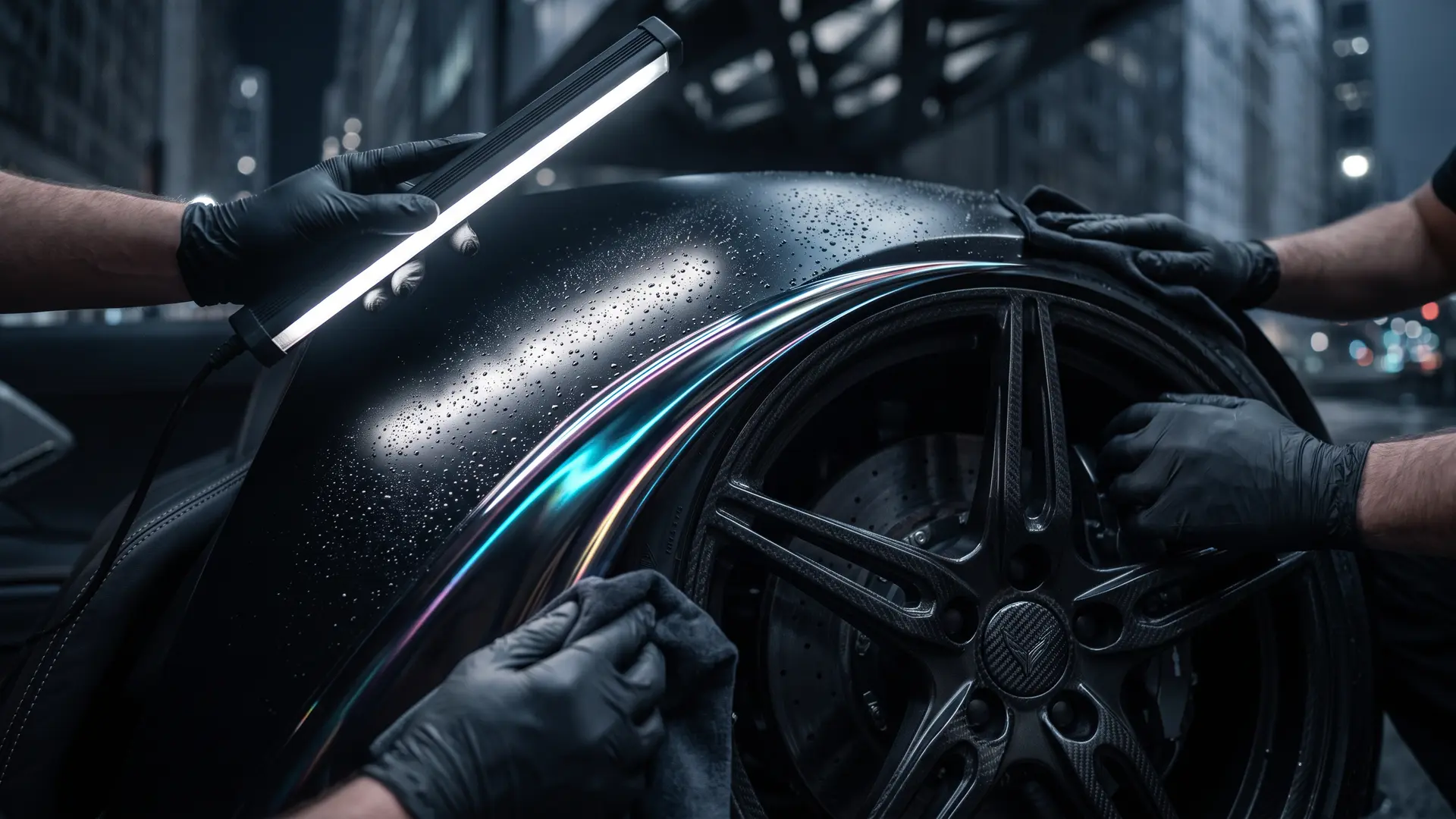
Cleaning removes contamination; restoration repairs damage
Detailing works on dirt, residue, debris, and other contamination sitting on or within a serviceable surface. Restoration changes or replaces a surface that has been physically, chemically, or structurally damaged.
A careful cleaning process can reveal damage more clearly without reversing it. A clean scratch is still a scratch. A vacuumed carpet can still have permanent dye loss. A treated seat can still show a burn or tear.
What exterior cleaning can address
The current packages can remove ordinary road film, loose grime, brake dust, dirt from reachable wheel areas, and contamination that responds safely to the listed wash process.
- Routine road film and surface dirt
- Loose wheel and tire contamination
- Exterior glass residue
- Lower-panel buildup that responds to safe cleaning
- A dull presentation caused by removable grime
What exterior cleaning cannot repair
Hand washing and spray protection do not level paint or rebuild a damaged finish. Machine polishing, paint correction, bonded ceramic coating, and body repair are outside the current menu. The separately listed engine-bay add-on is a cool-engine surface clean—not mechanical work or pressure washing.
- Scratches and swirl marks
- Rock chips, dents, and cracked paint
- Etching or oxidation
- Clear-coat failure
- Faded, cracked, or physically damaged trim
What cabin cleaning can improve
Interior cleaning can remove loose debris, dust, crumbs, surface residue, and many ordinary marks from material-safe surfaces. Depending on the package, work extends to fabrics, carpets, leather, seams, rails, cargo areas, and the source of some surface odors.
The words treatment, reduction, and cleaning are intentional. Results depend on the material, age, prior chemicals, heat exposure, and how long the contamination has remained in place.
What needs repair or specialized remediation
Cleaning cannot replace missing material or restore color that is no longer present. Burns, tears, cracked coatings, dye loss, delamination, stretched fabric, and permanent stains require repair, recoloring, replacement, or another restoration process.
- Burns, cuts, tears, and open seams
- Permanent staining or discoloration
- Leather or vinyl coating failure
- Broken or delaminated trim
- Deep smoke saturation
- Mold, bodily fluids, pests, or biohazards
How the serviceable scope is decided
Current condition photos provide the first review. At the appointment, Jay completes a walkaround before work begins and notes visible damage, material concerns, unsafe contamination, and anything outside the selected package.
An honest result is a clearly scoped cleaning process, visible improvement where the materials allow it, and a direct explanation of anything that requires work beyond detailing.